






Sadiq al-Rikabi
Ahmad al-Azraqi
Abstract
The relationship between archaeological evidence and religious stories constitutes a pivotal and intellectually contested field. It has long attracted the sustained interest of scholars across eras, disciplines, and geographical contexts. Although Western scholarship has historically taken the lead, interest in this subject gained momentum in the East only after it had already achieved prominence in Western academic debate. Archaeology itself emerged in the West, in part, as a reaction to the Church's intellectual dominance, a development shaped by a variety of accompanying historical conditions. The trajectory of interaction between archaeology and Qur'anic stories differs significantly from that in the Western Christian sphere. Certain Arab Enlightenment thinkers appropriated the perceived discrepancies between archaeology and biblical texts in the West as a methodological lens for interrogating the Qur'an, seeking to negate the historical dimension of religious narrative as a whole and projecting this negation onto the Qur'anic account-despite knowing that elements they dismissed in earlier scriptures often have analogues in the Qur'an. The historical engagement between archaeological inquiry and religious storytelling has been complex and frequently marked by tension, producing recurring episodes of debate and contestation. Re-examining this relationship through a contemporary epistemological framework is therefore essential for understanding its nature and for assessing the epistemic status of archaeological evidence; specifically, the extent of its validity and the limits imposed by its empirical domain. Adopting an analytical, descriptive, and critical methodology, this article traces the development of the archaeology-Qur'an discourse in both Western and Arab contexts, critically evaluates archaeological evidence, and engages a range of scholarly arguments and perspectives.

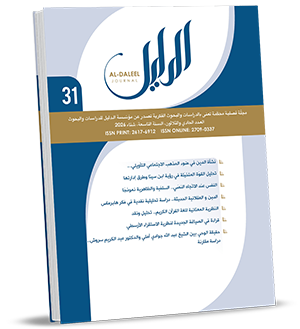
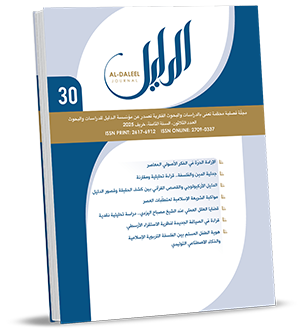
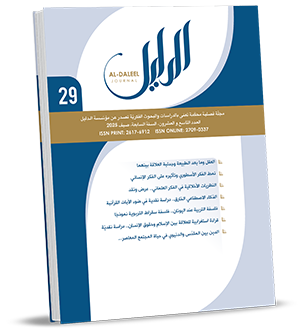

مؤسّسة الدليل للدراسات والبحوث هي مؤسّسةٌ تحقيقيّةٌ تعليميّةٌ تعنى بتحقيق الفكر الإسلاميّ .
 مؤسسة الدليل