













Abdul-Aziz al-Sawwafi
Abstract
This study investigates the defining characteristics of the Islamic Shari'ah and the methodological instruments of ijtihad through which Islamic law acquires its adaptive dynamism in the face of evolving socio-historical realities. The purpose of this study is to repudiate the assertion that Islamic law has become an archaic or outworn system, and to demonstrate that Islamic legislation retains both normative authenticity and enduring relevance across temporal contexts. To address the recurrent objection-namely, how a finite corpus of scriptural texts can accommodate the proliferation of novel circumstances and unprecedented human experiences-the study adopts a bifurcated methodological approach: a textual-theological method (manhaj naqli) to establish the law's elasticity for Muslim audiences, and a rational-inductive method (manhaj aqli wa istiqra'i) to articulate its coherence and viability to non-Muslims. The analysis proceeds by foregrounding two structural dimensions that distinguish the Shari'ah: 1- its inherent, self-contained principles and value-laden foundations 2- the robust methodological mechanisms of Islamic ijtihad, which endow the legal system with the capacity to assimilate emerging realities without compromising its essential moral and doctrinal core. The study concludes that the Shari'ah is fundamentally dynamic-capable of absorbing significant contemporary transformations and of providing principled responses to the unprecedented questions arising from modern life-even though its explicit textual sources appear limited in number.

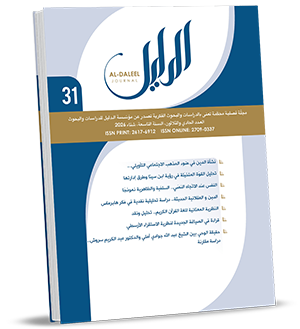
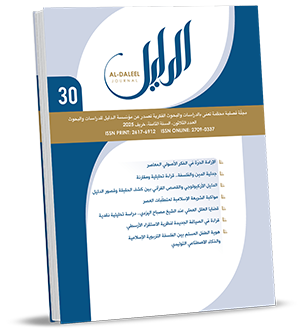
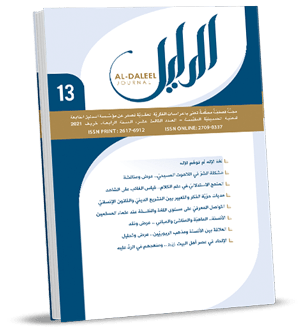
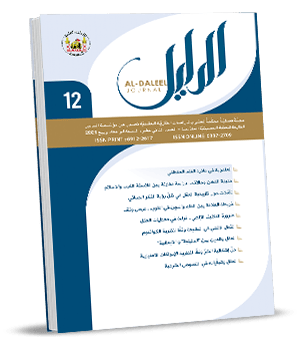
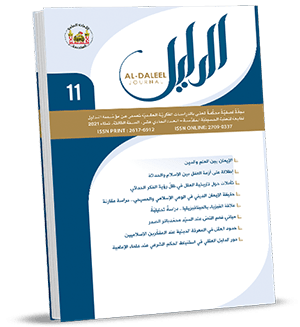
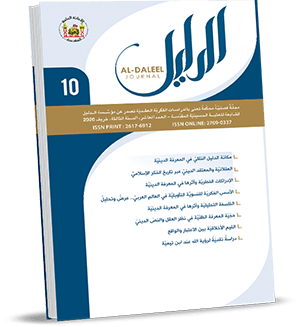

مؤسّسة الدليل للدراسات والبحوث هي مؤسّسةٌ تحقيقيّةٌ تعليميّةٌ تعنى بتحقيق الفكر الإسلاميّ .
 مؤسسة الدليل